
Every year, between late February and early March, almond trees in blossom mark the beginning of spring in Provence. In the Sud Luberon, this natural spectacle attracts lovers of walks, photography, and Provençal landscapes.
Here is where to see almond trees in blossom in the Sud Luberon, and when to plan your outing.
Where to admire almond trees in blossom in the Sud Luberon
The Sud Luberon is full of unspoilt spots where almond trees in blossom transform the landscape into a poetic setting. Here are a few places not to miss:
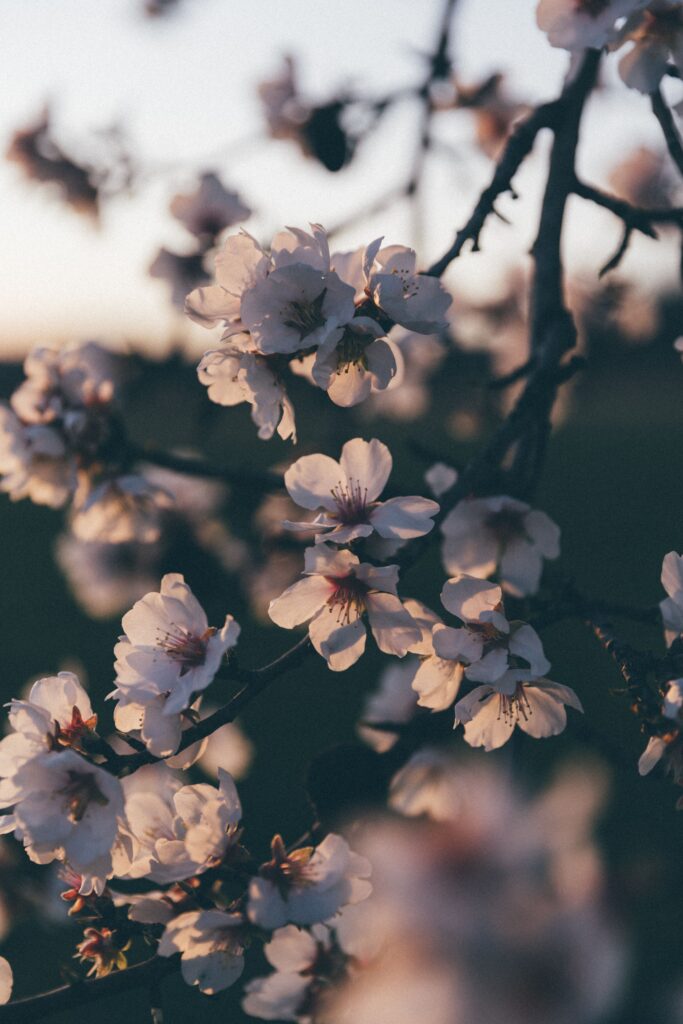
- Cucuron: Imagine a winding road lined with almond trees in blossom, with the Luberon mountains as a backdrop. This is what awaits you on the D135 between Ansouis and Lourmarin: a setting worthy of the most beautiful postcards.
- Cadenet: Nestled between Pertuis and Lourmarin, this village reveals, along its paths, orchards where almond trees put on their fleeting display, contrasting beautifully with the ochre tones of the surrounding land.
- Ansouis: Listed among the most beautiful villages in France, Ansouis transports you into a landscape where vineyards and almond trees blend harmoniously. Wander through its narrow streets, then take the departmental roads to admire the fields in bloom.
- La Bastide-des-Jourdans: Here, there are no crowds. Just you, the birdsong, and almond trees in blossom shimmering beneath the Provençal sun. An ideal spot for a peaceful walk.
- Grambois: This small hilltop village offers breathtaking views over the surrounding valley, dotted with white and pink touches of almond trees in full bloom.
Why and when do almond trees blossom in Provence?
Almond blossom is one of the earliest blooms of the year.
In the Sud Luberon, it generally takes place:
- between late February and early March
- sometimes as early as late January if the winter is mild
- for around 2 to 3 weeks
It all depends on the weather. A few sunny days can speed up the blossom; a spell of wind or rain can shorten it.
An early-blooming mediterranean tree
The almond tree (Prunus dulcis) is one of the first fruit trees to blossom in Provence. This early flowering is due to its adaptation to the Mediterranean climate. Originally from Central Asia, it was introduced to Provence by the Greeks more than 2,000 years ago and now thrives in the sunny, well-drained soils of the Luberon.
Its cycle follows a very specific rhythm: in winter, while other trees are still dormant, the almond tree senses the gradual rise in temperatures and the lengthening of the days. This sensitivity to the climate triggers its blossom, well before the leaves appear. It is a bold strategy that allows the tree to benefit from the first pollinators of the season, especially bees.
A fragile and fleeting natural spectacle
While the almond tree takes advantage of its head start on spring, this choice also comes with risks. Late frosts, which are common in February and March in Provence, can compromise pollination and damage the young flowers. This is why the varieties grown today are often selected for their resistance to cold temperatures.
In the Luberon, almond trees in blossom can be seen in fields, along roadsides, and even in the garrigue, where some wild specimens recall the region’s agricultural past.
From Antiquity to Today: the fascinating history of almonds in Provence
The almond tree has not always been here, and yet today it seems inseparable from Provençal landscapes. It was the Phoenicians who introduced it to the Mediterranean, while the Greeks and Romans perfected its cultivation. As early as the Middle Ages, it was used in cooking and recognised for its medicinal virtues.
In the 19th century, Provence was a major player in almond production in France, with thousands of hectares dedicated to this crop. Today, the sector is being revived thanks to local initiatives aimed at restoring the value of this emblematic crop. Projects such as planting new varieties adapted to the climate and to sustainable farming techniques are gradually bringing Provençal almonds back onto the national market.
For those who would like to learn more, some farms organise educational visits and tastings, offering a complete immersion into the world of almonds in Provence.
Sud Luberon Tourisme invites you to discover:
Le chant des amandes – Cucuron
This farming family carries on know-how passed down from generation to generation. Specialising in the production of cherries for candied fruit, they have been reviving almond tree cultivation since 2012 — a crop once grown by their grandfather — in order to restore Provençal almonds to their former glory. Committed to sustainable farming, they favour natural methods, such as using traps against insect pests and experimenting with plant cover to preserve biodiversity and limit soil erosion. Their farm showcases the French varieties Ferragnès and Lauranne, renowned for their intense flavour, generous size, and beautiful white colour, making them ideal for pastry-making and gastronomy.


For the best experience, choose a sunny morning after a cool night, when the dew enhances the petals. If you are a photographer, opt for dawn or sunset to capture the softness of the colours. Also check the weather forecast to avoid windy periods, which can quickly cause the flowers to fall.
Vous aimez cet article ?
Découvrez des articles similaires.

