
The Luberon is first and foremost a 60-kilometre-long mountain massif, straddling the departments of Vaucluse and Alpes-de-Haute-Provence. The mountain range, located at the heart of the Luberon Regional Nature Park, just 30 minutes north of Aix en Provence, is an iconic destination in Haute Provence, renowned for its charming hilltop villages, as well as the quality of its local produce and craftsmanship. The Luberon is also a land of wines, boasting its own Appellation d’Origine Contrôlée (French designation of origin), and breathtaking landscapes to explore by car, on foot or by bike. Whether you are staying in the Luberon for a holiday or just for a weekend, here is our selection of sites and villages to visit, walks and hikes to enjoy, and delicious local products to savour.
Unmissable villages
Ansouis: one of The ‘Most Beautiful Villages of France’

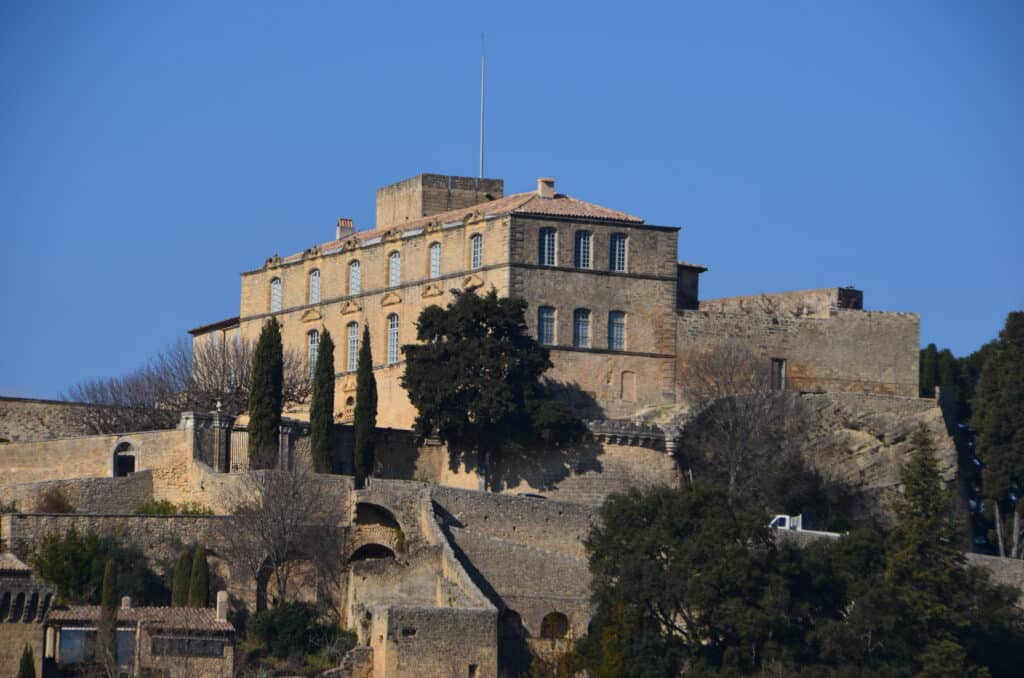
Listed among The ‘Most Beautiful Villages of France’ since June 1999, the village of Ansouis is best explored on foot, wandering through its narrow streets, narrow cobbled lanes and typically Provençal façades. The wealth of its heritage creates a strong cultural focus, with art galleries, museums, and its furnished, inhabited château.
The château, which already existed in the 9th century, was a military fortress built on a rocky outcrop overlooking the Aigues valley. In 2008, the château was sold at candle auction and acquired by new owners, Mr and Mrs Rousset-Rouvière. Since then, they have been committed to continuing the restoration work while opening the château to visitors (by reservation during the summer season).
We recommend taking your time to explore the village’s art galleries: the Atelier Éphémère, the studio gallery Lartelier, and the Juliet Schlunke gallery are just some of the places where you can discover beautiful creations. For a truly surprising experience, head to the Musée Extraordinaire d’Ansouis, created in 1975 by Georges Mazoyer, an artist and scuba diver. Inside a Provençal building, a series of medieval vaults provide a true showcase for countless wonders including fish, shells and corals. Discover over forty years of passion and diving around the world, with unique creations such as paintings, ceramics, and stained glass.
The other museum to visit is located outside the village, at the Château Turcan estate: the Museum of Arts and Wine. More than 3,000 tools and pieces of equipment, including some unique items, from the worlds of viticulture and cooperage, one of the oldest wine presses (18th century), oenology objects (a 1900s laboratory) and traditional vineyard tools are on display.
Cadenet and its iconic spots: from the lake to panoramic views over the valley

The magnificent village of Cadenet embodies everything that is quintessentially Provence: lush natural surroundings, a hilltop village offering breathtaking views, and a way of life that is distinctly Provençal. Once the capital of basketry, Cadenet enjoyed a period of prosperity in the first half of the 19th century, thanks to the growth of local craftsmanship. Many basketry studios were established, working with willow grown in the valley of the Durance River. A period beautifully brought to life by the Basketry Museum for over 30 years. Here you will find more than 2,000 examples of basketry for everyday use, furnishings and accessories, bearing witness to a craft that profoundly shaped the history of this village community from the 19th century to the end of the 20th century.
We invite you to walk to the site of the former château, where today only a few remains can still be seen. The village château was dismantled in the 17th century, by order of Louis XIV, then burned down by revolutionaries in 1792. It was never restored; on the contrary, it was dismantled stone by stone throughout the 19th century. Without the engravings from that era, it would be hard to imagine that up there once stood a complex of towers, buildings, and crenelated walls.
Take the time to wander through the village’s winding streets, to sit in the Place du Tambour d’Arcole, named after a young local farmer, André Estienne, who served as a drummer in Napoleon’s armies and distinguished himself during the recapture of the Pont d’Arcole on 16 November 1796, bravely wading into the torrent under enemy fire.
Just a short distance from the village, cool off in the lake at the Val de Durance campsite. These four lush hectares are open to visitors from outside the campsite and feature a landscaped lakeside area (with lifeguards during the high season). A small snack bar offers a wide selection of drinks to quench your thirst, along with a range of snacks to satisfy both small and large appetites. Of course, you are welcome to bring your own picnic! To help you digest your meal or simply stretch your legs, you can enjoy a short walk of around 30 minutes and take in the scenery.
Cucuron: a funny-sounding name

The village of Cucuron is undoubtedly one of the most beautiful villages in the Vaucluse, a hidden gem that deserves to be discovered at your own pace during a visit to South Luberon. Though it has a funny name, the village of Cucuron is a magnificent, typically Provençal village with timeless charm.
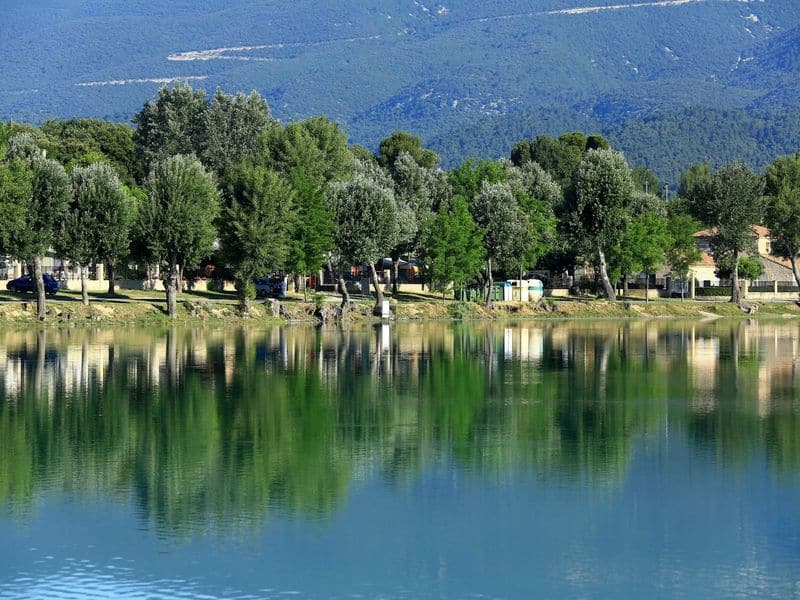
Take the time to sit by its vast lake, beneath the shade of its centuries-old plane trees. You will notice the countless goldfish swimming happily in the water. In season, the terraces of cafés, restaurants and the ice‑cream maker become true havens of peace and coolness.


Within the medieval village, you will stroll among the beautiful façades of 17th- and 18th-century houses. Head to the ‘Sus-Pous’ tower, located at one end of the village. An extraordinary panoramic view awaits you there at sunrise. And if you wish to admire the last rays of daylight over the rooftops of Cucuron, head to the opposite end of the village, to the Saint Michel keep.
Depending on the day and opening hours, you can also visit the Marc Deydier museum, catch a film at the ‘Le Cigalon’ cinema, or set out to meet the artists and craftspeople of Cucuron. Some have even come together in the cooperative shop ‘Cuc’ Factory’, where around fifteen local professionals share a 120 m² space to sell their creations directly to the public.
Grambois: an authentic hilltop village
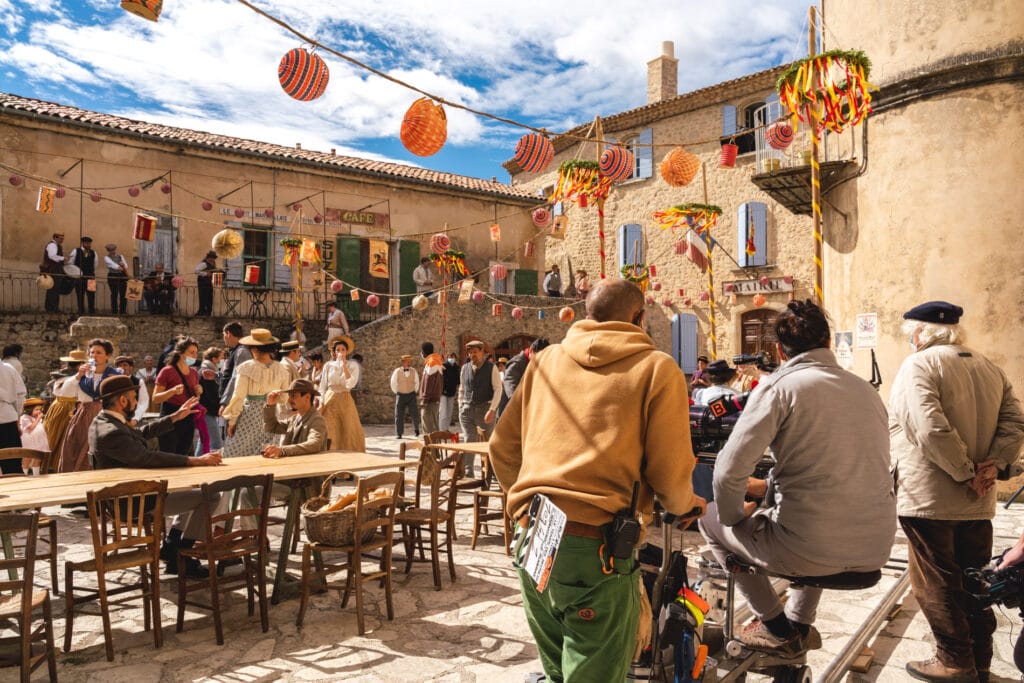
Located in the heart of South Luberon, the village of Grambois is a true film set. Indeed, several films have been shot here, including those from the trilogy by Marcel Pagnol: ‘My Father’s Glory’, ‘My Mother’s Castle’”, and the most recent, ‘The Time of Secrets’. Christophe Barratier came here to film several scenes for his movie, which was released in 2022. Take the time to sit in the square, a beautiful spot with a fountain, which was the setting for the famous pétanque scenes and the photo with the partridges in ‘My Father’s Glory’.
La Tour d’Aigues, its château and vineyard

Perched on a rocky outcrop in the southern part of the Luberon, La Tour d’Aigues is a charming village that will delight you with its outstanding natural setting, endless vineyards, and remarkably preserved and restored heritage. A must-see in the Aigues region, the village is a small community with a variety of local shops, a vibrant weekly market, and a special location.
Visit the Renaissance masterpiece in Provence, the Château de la Tour d’Aigues, nestled at the foot of the Luberon hills. The château’s courtyard invites you to contemplate its ruins, with information panels guiding you through the buildings as they evolved over the centuries.
Mirabeau and its rural setting

Nestled on the banks of the Durance River, in the heart of Provence, the squares of the village of Mirabeau are worthy of a theatre set. This village is a true Provençal icon, as it was here that ‘Manon of the Spring’ was filmed, directed by Claude Berri.
Overlooking the village, the hilltop château of Mirabeau captivates with its beauty and grandeur. Only its sea-green shutters bear witness to its restoration. Currently, it is a private property, not listed as a Historic Monument, and is not open to visitors.
Natural and geological sites
Lavender in the Luberon
South Luberon is fortunate to have a few fields of lavandin, which generally bloom from mid-June to mid-July, after which they are harvested to extract their essential oil. Not far from the village of Cucuron, lies the estate of La Provence en Bouteille, where Virginie and Benjamin Maurizot grow organic lavandin and other plants to produce essential oil, as well as delicious syrups. Other fields are located between Cucuron and Cabrières d’Aigues, as well as near Beaumont de Pertuis, where several hectares of lavender have recently been planted.

Etang de la Bonde
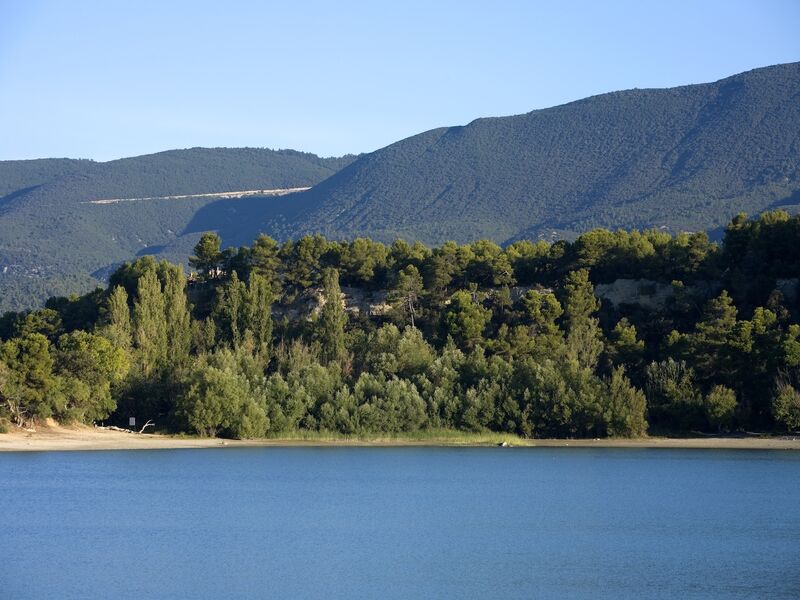
Located between Cabrières-d’Aigues and La Motte-d’Aigues, this 16th-century lake was once used to supply water to the mills of the château at La Tour-d’Aigues. Today, it is one of the few places where swimming is permitted in the Luberon.
The geological trail of Cabrières-d’Aigues
High above Cabrières-d’Aigues, this marked 9.3 km loop (around 3 hours on foot) immerses you in 150 million years of geological history.
The route, marked by 13 educational panels, unveils the formation of the South Luberon landscapes: marine limestone, oyster fossils, ancient faults, former lime kilns, and even a water gallery carved into the rock. Along the way, magnificent viewpoints open up over Mourre Nègre and the villages of the Aigues plain.
An ideal walk for the curious, whether with family or friends. Please note, however, that in summer access is regulated according to fire risk (information available on the Vaucluse prefecture website).
Architectural heritage


The built heritage of South Luberon is a true treasure, immersing you in the heart of our villages’ past, shaped by religious and political upheavals. Each monument has its own story, of devotion, abandonment, depopulation, or plundering, revealed in the marks left on its walls by alterations, restoration work, or the arrival of new objects. Whether Romanesque or of more recent construction, come and explore them, and admire the architecture and liturgical objects that make these places so rich. In the heart of South Luberon, you can also admire three Protestant temples nestled in the villages of La Motte d’Aigues, Cabrières d’Aigues and Peypin d’Aigues. These monuments have shaped the history of the villagers of South Luberon.
Not to be missed:
- Château de La Tour d’Aigues: This Renaissance château, now partially in ruins, still boasts an impressive façade and vaulted cellars. It houses an earthenware museum (visits by appointment), exhibitions, and open-air performances during the summer. The main courtyard is open to visitors.
- The Saint-Eucher Chapel in Beaumont de Pertuis: Nestled against the cliffside, this semi-troglodyte sanctuary overlooks the valley. It is accessible only on foot via a steep path (approx. 2 hours round trip), and is surrounded by local legends and untamed nature.
- The Saint-Julien Chapel in La Bastidonne: Perched on the hill of Saint-Julien, this 17th-century chapel, now in ruins, offers a magnificent viewpoint over the valley of the Durance River. It is accessible via an easy 3 km walk (1½ hours round trip), and is located on an ancient Celto-Ligurian oppidum and a major geological site of the Luberon.
The gastronomy of the Luberon

South Luberon is a land of abundance, offering a wealth of high-quality products, including olive oil, wine, black truffle from Provence, Luberon almonds, sun-ripened fruit and vegetables, and honey. The finest products of Provence can be found straight from the producers, at local markets, and ultimately on your plate, whether at home or in a restaurant.
Michelin-starred restaurants
Rich in its delicious aromas, Provençal cuisine is above all a cuisine of love, creativity and boldness. The restaurants of South Luberon will introduce you to a variety of flavours, tailored to your tastes and current desires. Whether in an original or traditional setting, some pay tribute to our local produce, others uphold tradition, but each brings its own charm, creativity, and unique personality. If you’re looking for something truly exceptional, we recommend heading straight to our Michelin-starred chefs: a guaranteed culinary experience!
- La Fenière, a vibrant restaurant in Cadenet: plant-based cuisine conceived and crafted by Nadia Sammut, awarded one Michelin star plus a Green Star for her sustainable approach to gastronomy, respect for the land, the seasons, animals, and her commitment to better eating.
- La Petite Maison de Cucuron: the renowned establishment of chef Eric Sapet, awarded one star in the Michelin guide. Once a bar on the square in Cucuron, La Petite Maison has retained its welcoming spirit, inviting you to discover playful and inventive market-fresh cuisine, where the finest seasonal produce preserves the Provençal flavours of days gone by.
Producers offer visitors a warm welcome
The beauty of the Luberon goes far beyond its lush vegetation! The land itself produces wonders. Be sure to stop and meet our producers who create exceptional local produce! For example, we recommend:
- La Bastide du Laval in Cadenet: olive oil producer, inviting you to stroll among the olive trees, discover the mill, and enjoy a guided tasting.
- Le Domaine des Perpetus at La Tour d’Aigues: producer of natural wines, olive oil, honey and truffles. A fine selection of regional products to discover while enjoying stunning panoramic views.
- Les Terrasses d’Adrien in Sannes: a wine and olive estate offering a tasting area. It is also a lively meeting place, especially during the summer season. Don’t miss their musical and theatrical evenings.
What to do on holiday in South Luberon

Holidaying in South Luberon means disconnecting from everyday life and immersing yourself in the Provençal way of life. It’s also about taking your time. Slow down your pace to savour every moment, and live in harmony with the abundant nature that surrounds you here. Slow tourism is no empty phrase in the Luberon. The hilltop villages are best explored on foot or by bike, allowing you to truly appreciate their indescribable beauty around every winding lane or fountain. The evening light perfectly enhances this heritage.
South Luberon is also ideal for hiking and cycling. Routes suitable for all abilities are available. You can just as easily climb the Grand Luberon mountain and reach its summit, Mourre Nègre, as take a gentle walk suitable for children among the vineyards and olive groves. Mountain bikers will also be in their element, with trails specially designed for them, winding through the countryside and the mountains.

Thrill-seekers will not be left out, as a stunning selection of treetop adventure courses awaits near the village of La Tour d’Aigues. Experience the thrill of heights at Forest Sensation! And for those who prefer a gentler pace, yoga classes are regularly organised throughout the region.
Discover more about the Sud Luberon
The Sud Luberon is about much more than just a few must-see sites: every village has its own hidden lanes, artisans, markets, and panoramic views. Passionate local producers bring the region’s terroir to life with their unique specialities. And when it comes to activities, there’s always something new to discover: walks, workshops, visits, nature outings, and more. To make sure you don’t miss a thing, explore the rest of the Tourist Office website and let yourself be guided towards even more wonderful discoveries.


